Caribbean Stud Two Pair Payout: The Brutal Math Most Players Get Wrong
Two pair in Caribbean Stud is the sucker punch of the entire payout table. You beat the dealer, your hand looks solid, and then the paytable slaps you with a 2:1 return on the ante and a flat even-money on the raise bet. That is it. No escalating multiplier, no jackpot tease, nothing. If you do not understand this cold reality before you sit down, you are bleeding money on Caribbean Stud Two Pair Payout every single session.
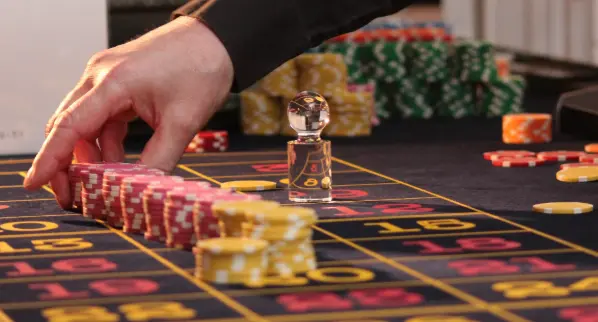
Let me break the actual math down without the casino sugarcoating. The standard Caribbean Stud paytable pays 2:1 on the ante bonus for two pair, and even money on the raise wager. Compare that to a flush at 5:1, a full house at 7:1, or a straight flush at 50:1. The jump from two pair to three of a kind alone triples your ante return. This is not a design accident. The house engineered the payout ladder so the most statistically common winning hand — two pair — delivers the thinnest possible reward. 😤
The House Edge Nobody Advertises on Two Pair
Here is what the operators bury in the fine print. Caribbean Stud carries a base house edge of roughly 5.2 percent when played with optimal strategy. But when you isolate hands where the player holds two pair and the dealer qualifies, the effective return drops even further because of the mandatory raise structure. You are forced to put additional money behind a hand that caps out at even money on the back end. That is not a game. That is a tax on optimism.

The real killers are the frequency numbers. You will flop two pair roughly once every 21 hands in a standard 52-card deal. That means in a typical hour of live dealer play at 40 hands per hour, you are looking at fewer than two two-pair situations. When they hit, the payout barely moves your chip stack. Meanwhile, the ante you lost on the other 19 hands keeps compounding against you. The variance is brutal and the reward structure is intentionally flat.
Budget Caribbean Stud Live Dealer: Where the Smart Money Actually Sits
Now here is where it gets interesting for grinders. Budget Caribbean Stud live dealer tables have exploded across offshore platforms, and the minimums are absurdly low — we are talking $1 ante with $2 raise on some crypto-native tables. This changes the calculus entirely because the ante bonus on two pair at 2:1 still applies regardless of your base bet. On a $1 ante, a two-pair win nets you $2 on the ante plus $2 on your $2 raise, minus the dealer's qualifying hand comparison. You are pulling $3 to $4 profit on a $3 total exposure. On a $25 table, that same hand structure demands $75 in total risk for the same proportional return. The budget tables are mathematically superior for bankroll longevity.
Dealer Qualification: The Silent Payout Killer
This is the part that destroys budget players who do not read the rules screen. If the dealer does not qualify with Ace-King or better, your two pair gets paid at even money on the ante only — the raise bet pushes. So you can hold a beautiful two pair and walk away with a single unit of profit because the dealer showed Queen-high. 💀 That scenario happens more often than you think. Dealer non-qualification rates hover around 43 to 44 percent in a standard game. Nearly half your two-pair hands are going to get neutered by a dealer who cannot even muster a qualifying hand.
Why Budget Live Dealer Tables Change the Two Pair Equation
The physics of the budget format matter. Live dealer streams on low-stakes tables typically run faster shuffle cycles and accept more players per table, which compresses the time between hands. That means more two-pair opportunities per hour. More opportunities at a flat 2:1 ante payout with a tiny base wager creates a grind-friendly environment that the high-limit pits cannot replicate. The math favors volume over unit size when the payout ceiling for your most common strong hand is artificially capped. Stack that against the 5.2 percent base house edge and the budget table becomes the only rational entry point for anyone who actually understands what two pair is worth in this game.
The payout structure on two pair is not a bug — it is the engine that keeps Caribbean Stud profitable for the house. Treat it accordingly or keep donating your bankroll to the dealer's qualifying hands.